
Politics
ADC Primary Highlights Debate Over Political Funding

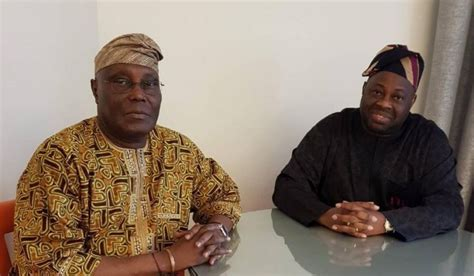
As the African Democratic Congress (ADC) prepares for its presidential primary in the run‑up to the 2027 general elections, questions about political financing, campaign funding and internal party democracy have taken centre stage, highlighting broader debates about how money shapes Nigeria’s competitive party politics.
At the heart of the discussion is concern among political observers and commentators about the risk of financial inducements influencing delegate voting in the ADC’s selection process. These concerns reflect wider anxieties in Nigerian politics about the role of cash and other material incentives in determining outcomes in party primaries — a practice critics often describe as “money politics”. However, senior figures within the ADC have moved to counter speculation that the party’s internal contest will be driven by illicit financial inducements rather than open debate and democratic engagement.
Chief among those speaking on the issue is Dele Momodu, a chieftain of the ADC and publisher of Ovation Magazine, who has dismissed claims that former Vice President Atiku Abubakar would deploy large sums of money to influence delegates ahead of the party’s primary. In interviews on national television, Momodu clarified that while campaigns inevitably require funds to operate effectively, there is a clear distinction between legitimate campaign expenditures and illegal bribery. He emphasised that campaign budgets are typically spent on logistics, organisational support and safeguarding electoral processes, rather than on paying delegates directly for their support.
Momodu’s comments underscore a broader effort within the ADC to frame political finance in terms of operational necessity rather than undue influence. He argued that campaign funds are essential for managing events such as election day operations, ensuring votes are properly counted and protected, and facilitating voter and delegate engagement — elements that are critical to the integrity of any electoral contest. By highlighting these practical needs, he sought to shift the narrative away from allegations of vote buying.
The debate over political finance in the ADC primary also intersects with speculation about the personal finances of key aspirants. Momodu and other party leaders have pointed out that Atiku Abubakar, unlike some other political figures who control state resources through executive positions, does not have unfettered access to public funds. This distinction is used to counter arguments that he could marshal huge cash reserves to “buy” delegate support. By framing Atiku’s financial profile in this way, ADC officials aim to reinforce the perception that the primary will be competitive on the basis of ideas and organisational strength rather than sheer spending power.
Beyond individual statements, the ADC as a party has also made structural decisions intended to enhance the credibility of its selection process. Party leaders have publicly stated that there is no automatic ticket for any aspirant, regardless of profile or stature, and that all candidates must engage in a transparent primary process. This stance is meant to underline the party’s commitment to internal democracy and to discourage practices that could undermine confidence in its candidate selection.
Moreover, the broader context of the ADC’s evolution includes debates about coalition building, internal unity and strategic positioning against the ruling All Progressives Congress (APC). With figures such as Atiku Abubakar, Peter Obi and Rotimi Amaechi associated with the party or eyeing its ticket, the ADC faces intense scrutiny over how it manages both political finance and the perceptions surrounding it. Public statements from aspirants, including Atiku’s insistence that the process remain open and competitive, reinforce the party’s official position on transparent contestation.
As the primary approaches, the intersection of political finance and internal party democracy will remain a defining feature of the ADC’s narrative. Observers will be watching closely to see whether the party’s efforts to manage campaign spending and public perceptions translate into a process that is widely viewed as fair, competitive and free from undue financial influence.
-
Nigeria’s Net Reserves Surge 772% to $34.8 Billion in Two Years
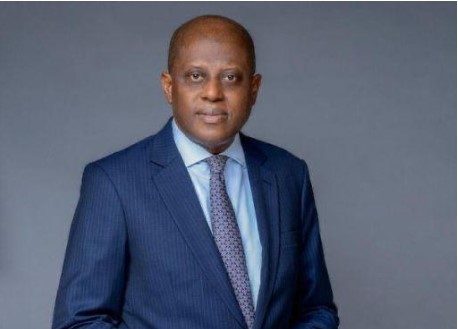
Nigeria’s net foreign exchange reserves rose sharply to $34.8 billion by the end of 2025, marking a 772% increase from the $3.99 billion recorded at the end of 2023. This significant growth highlights a strengthening of the country’s external financial buffers. The improvement reflects stronger external sector fundamentals and sustained policy reforms. While gross reserves—which…
-

Niger State Delivers Round-the-Clock Solar Power to 180 Communities
At least 180 communities in Niger State that had previously gone without reliable electricity for over a decade are now receiving 24-hour solar power, thanks to the deployment of solar mini-grids and renewable energy solutions by the state government. The initiative also covers key public institutions, including Government House, the General Hospital, the IBB Specialist…
-
Scrapping Indirect Primaries Seen as Key to Fighting Money Politics
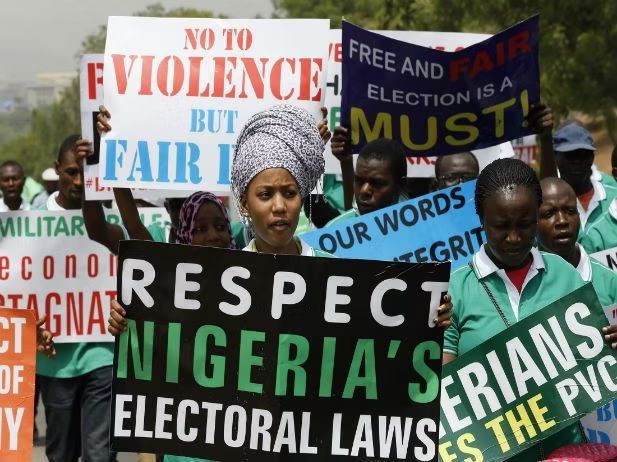
Clement Jimbo, member of the House of Representatives representing Abak/Etim Ekpo/Ika Federal Constituency, has defended the removal of indirect primaries in the 2026 Electoral Act, arguing that it will reduce money-driven politics in Nigeria. In an interview on Channels Television’s The Morning Brief, Jimbo stated that indirect primaries previously allowed a small number of delegates…