Politics
Senate Queries Ministers on Failed Safe School Plan

The Senate has summoned the Minister of Finance and Coordinating Minister of the Economy, Wale Edun, and the Minister of Education, Tunji Alausa, to appear before its ad hoc committee probing the failure of the Safe School Initiative. The directive followed the committee’s inaugural sitting on Wednesday, during which members adopted their investigation plan amid renewed national anger over worsening attacks on schools.
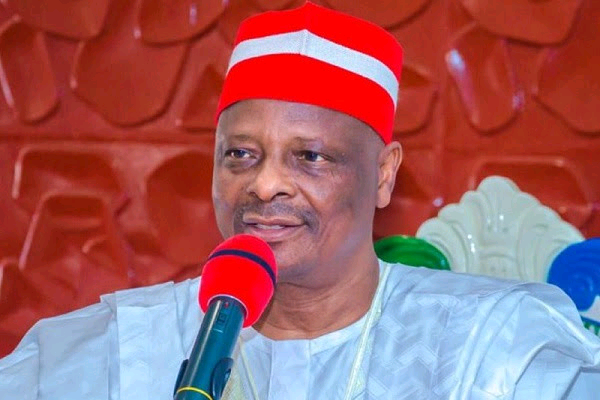
The summons also extends to the Minister of Defence, Christopher Musa, the Commandant General of the Nigeria Security and Civil Defence Corps, Mohammed Audi, and representatives of school proprietors. Committee chairman Senator Orji Uzor Kalu said the Senate intends to uncover why billions of naira invested in the programme have not translated into safer learning environments for Nigerian children.
Kalu, who briefed journalists after the meeting, described Nigeria’s record of school attacks as alarming and unacceptable. He noted that more than 1,680 schoolchildren have been abducted and over 180 educational facilities attacked since 2014, despite sustained funding and international donor support.
His comments came on the heels of two major abductions that have reignited public outrage. In November, gunmen invaded St. Mary’s Catholic School in the Papiri area of Niger State and abducted 303 students and 12 teachers in one of the largest mass kidnappings in recent years. Days earlier, attackers stormed Government Girls Comprehensive Secondary School, Maga in Kebbi State, kidnapping 25 schoolgirls and killing the vice principal. The incidents form part of a dangerous escalation in school-targeted violence across the country.
Kalu said the committee would review every allocation to the Safe School Initiative, including the $30 million mobilised between 2014 and 2021 and the recent N144 billion earmarked by the government for 2023 to 2026. According to him, the Senate intends to “track every naira and every dollar” spent on the programme to determine why schools remain exposed.
Launched in 2014 in the aftermath of the Chibok abduction, the Safe School Initiative was created to strengthen security around schools in high-risk communities and ensure continuity of learning. A National Safe School Secretariat, domiciled in the Ministry of Finance, was established to coordinate the programme alongside a technical working group involving various ministries, security agencies and state governments.
Despite these structures, implementation has remained erratic. Government documents show that N15 billion was released in 2023 to begin the first phase of the national plan, with initial coverage targeted at 48 schools across 18 high-risk states. The broader strategy aims to secure half of the most vulnerable schools nationwide between 2023 and 2026, but progress has been slow even as attacks persist.
Kalu stressed that the ongoing probe is not intended to witch-hunt individuals or institutions but to restore transparency and revive a programme critical to children’s safety. He said the investigation will examine utilisation of funds since 2014, deployment of security personnel, early-warning systems, emergency response mechanisms, and infrastructure upgrades in vulnerable schools. Partnerships with donor agencies and private-sector contributors will also be reviewed.
With the latest mass abductions adding to a troubling pattern, the committee has pledged a comprehensive audit that engages all relevant stakeholders. Kalu said Nigerian families deserve clear answers about why the initiative has failed to deliver its core promise more than a decade after it was launched.