Politics
2027 Elections: INEC unveils draft party regulations, seeks reforms

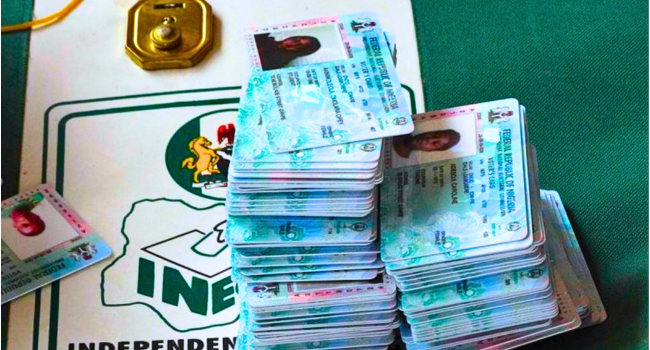
The Independent National Electoral Commission (INEC) has released draft regulations to guide political parties ahead of the 2027 general elections, signalling a major shift aimed at strengthening internal democracy and electoral transparency.
The INEC chairman, Joash Amupitan, unveiled the proposed 2026 Regulations and Guidelines during a consultative meeting with party leaders in Abuja, noting that the review aligns with provisions of the new Electoral Act 2026.
Amupitan stressed the urgency of the reforms, declaring, “Nigeria cannot navigate a 2027 horizon using a 2022 map,” while urging political parties to study key provisions, particularly Clause 40(4) and (5) on election expenses for primaries and campaigns.
He explained that the draft guidelines were subjected to a clause-by-clause review to ensure legal compliance and operational efficiency under the updated law.
Drawing insights from the Political Party Performance Index developed in collaboration with the Westminster Foundation for Democracy, INEC identified gaps between party constitutions and grassroots realities.
According to him, the regulations cover critical areas such as party registration, mergers, administration, and accountability. They are also designed to promote transparent primaries, discourage the imposition of candidates, and reduce voter apathy and post-election litigation.
Amupitan added that the framework introduces stricter standards for campaign conduct, financial transparency, and conditions for party deregistration.
It also provides measurable benchmarks to enhance the participation of women, youth, and persons with disabilities in the political process.
He urged stakeholders to embrace the draft as a democratic safeguard rather than a constraint.
However, the national chairman of the Inter-Party Advisory Council, Yusuf Dantalle, called for urgent amendments to the Electoral Act 2026, arguing that certain provisions place undue pressure on political parties.
Dantalle criticised the compulsory use of direct primaries and the requirement to submit membership registers with National Identification Numbers within a limited timeframe.
He also raised concerns over what he described as weakened penalties for vote buying and called for the immediate restoration of mandatory electronic transmission of results to INEC’s Results Viewing portal.
He further reiterated the council’s demand for the establishment of an Electoral Offences Commission to strengthen accountability, urging the National Assembly to revisit the law to ensure credible and transparent elections.