Business
FG Defends Executive Order 9, Says It Enforces Revenue Remittance

The Federal Government of Nigeria has defended Executive Order 9 (EO9), insisting that the directive merely reinforces constitutional provisions on revenue custody and does not confer legislative authority on the President.
The clarification was issued in a statement by Tanimu Yakubu, Secretary of the Implementation Committee on EO9, who rejected claims that the order represents an attempt by the President to create law. He described such interpretations as a misunderstanding of both constitutional provisions and public finance rules.
Yakubu cited Section 80(1) of the Constitution, which mandates that all revenues collected by the Federation must be paid into a single account known as the Consolidated Revenue Fund.
According to the statement, EO9 does not establish new legal frameworks but ensures compliance with existing constitutional requirements regarding the management of public funds.
It stressed that public revenues cannot be lawfully retained or applied outside constitutionally recognised accounts, noting that Section 162 further requires that revenues accruing to the Federation be paid into the Federation Account for distribution based on constitutional allocation principles.
Yakubu explained that the fiscal process is straightforward: revenues must first enter constitutionally recognised accounts before they can be appropriated, shared, or spent.
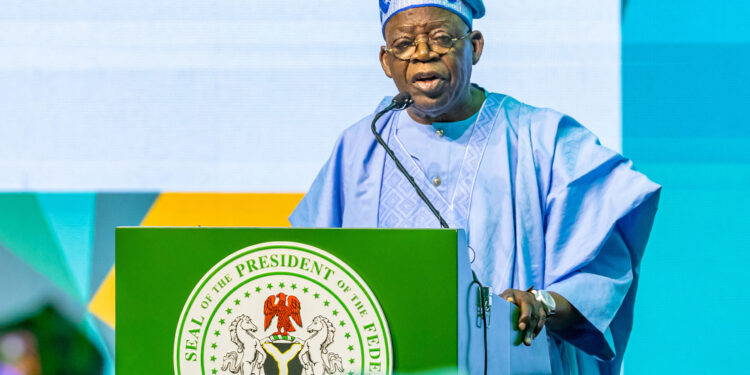
Earlier in the month, President Bola Tinubu signed Executive Order 9, directing the suspension of management and frontier exploration fees previously collected by the Nigerian National Petroleum Company Limited and mandating the full remittance of oil and gas revenues into the Federation Account.
The Federal Ministry of Finance stated that the move is intended to align revenue flows from the oil and gas sector with constitutional provisions, curb leakages, and improve fiscal transparency. This comes amid concerns over declining inflows into the Federation Account despite stronger oil output and favourable global prices.
Officials also indicated that some fiscal arrangements introduced under the Petroleum Industry Act, which commercialised NNPC into a limited liability company, had resulted in off-budget deductions and allocations from Federation revenues.
The government maintains that EO9 simply operationalises constitutional requirements within the petroleum sector by mandating direct remittance of royalties, taxes, profit oil and gas, penalties, and related receipts into constitutionally recognised accounts. It also strengthens reconciliation and reporting procedures to improve transparency.
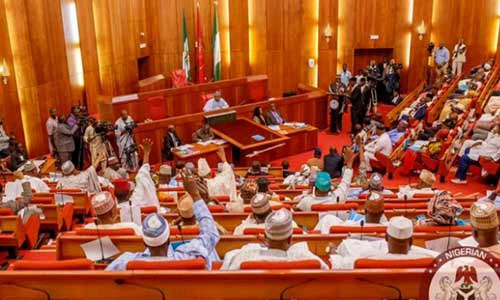
The statement emphasised that the order does not interfere with legislative powers, noting that the procedural autonomy of the National Assembly of Nigeria remains protected.
Officials added that EO9 does not amend the Petroleum Industry Act or repeal any statute, but rather functions as an executive directive issued to ensure faithful implementation of existing laws.
The government further stated that any dispute over the constitutionality of the order should be resolved by the courts. Until then, the Executive remains obligated to safeguard Federation revenues, uphold constitutional supremacy, and strengthen fiscal integrity in support of FAAC distributions, budget credibility, and macroeconomic stability.