
Features
Jesse Jackson 1941–2026

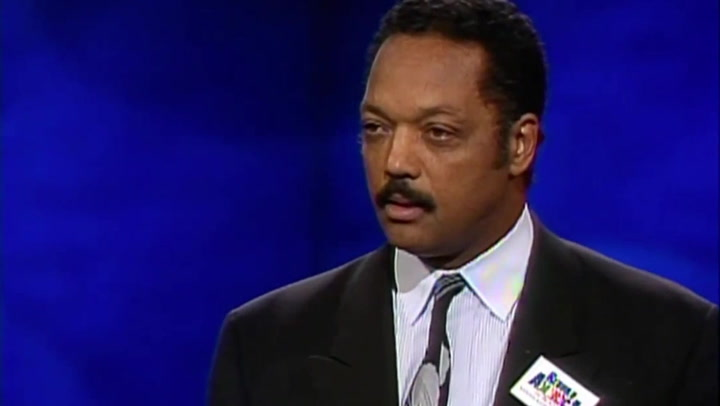
A Life of Faith, Protest, Politics and Global Advocacy
The death of Jesse Jackson at the age of 84 marks the passing of one of the most recognisable voices of the modern civil rights era — a preacher-activist whose influence stretched from the pulpits of Chicago to the streets of Selma, from presidential campaigns to international diplomacy.
For more than six decades, Jackson stood at the intersection of faith, social justice and political mobilisation, helping to shape the post-1960s trajectory of Black political participation in the United States while building a global reputation as an advocate for the marginalized.
Early Life and Formative Years
Jesse Louis Jackson Sr. was born on October 8, 1941, in Greenville, South Carolina, during the height of segregation in the American South. Raised in poverty by his mother, Helen Burns, and later by her husband Charles Jackson, the young Jackson grew up in a society defined by racial hierarchy and limited opportunity for Black Americans.
Despite the constraints of the era, he excelled academically and athletically. After attending North Carolina A&T State University, where he became student body president, Jackson initially pursued theological training at Chicago Theological Seminary. His path, however, quickly moved beyond the classroom and into activism.
Jackson’s national prominence began when he joined the Southern Christian Leadership Conference (SCLC), the organisation led by Martin Luther King Jr..
Under King’s mentorship, Jackson participated in voter registration drives, economic justice campaigns and anti-segregation protests throughout the South. He was present during some of the defining moments of the civil rights movement, including demonstrations in Selma and Chicago.
King’s assassination in 1968 proved a turning point. Jackson emerged from the tragedy determined to continue the struggle, though his leadership style differed from that of his mentor. Where King emphasised moral persuasion and nonviolent theology, Jackson increasingly focused on economic empowerment and political representation.
Building Independent Civil Rights Institutions
After the late 1960s, Jackson carved out his own organisational base, founding Operation PUSH in Chicago. PUSH — an acronym for “People United to Save Humanity” — emphasised economic justice, corporate accountability and Black entrepreneurship.
Through PUSH, Jackson promoted boycotts, negotiated minority hiring commitments from corporations and championed educational opportunities for disadvantaged youth.
In the 1980s, he expanded his coalition-building efforts by forming the National Rainbow Coalition, an alliance designed to unite minorities, labour groups, farmers, and progressive activists into a broader political force.
The coalition’s philosophy was simple but ambitious: political power required numerical strength, and social justice movements needed to transcend race alone to include class, gender and economic concerns.
Presidential Campaigns and Political Influence
Jackson’s two presidential runs transformed him from activist to political power broker.
He first sought the Democratic nomination in 1984, entering a race dominated by the conservative resurgence of Ronald Reagan. Although he did not win the nomination, Jackson secured millions of votes, won several primaries and demonstrated that a Black candidate could build a national coalition.
His 1988 campaign proved even more consequential. Jackson won 11 primaries and caucuses, finishing second overall in the Democratic contest. He mobilised unprecedented Black voter turnout and attracted progressive whites, students and labour voters.
While he never captured the presidency, Jackson reshaped Democratic Party politics by proving that minority mobilisation could alter the electoral map. His campaigns helped normalise Black presidential ambitions decades before Barack Obama’s historic victory.
Diplomatic and Global Engagement
Jackson’s influence extended beyond American politics into international diplomacy and humanitarian advocacy.
In the 1990s, President Bill Clinton appointed him as a special envoy to Africa, where Jackson engaged in mediation efforts, election monitoring and economic diplomacy.
He was also known for negotiating the release of American hostages abroad, intervening in conflicts from Syria to Cuba and advocating for debt relief and development assistance for African nations.
Jackson’s international activism reinforced his reputation as a bridge between grassroots movements and state diplomacy — a figure capable of operating both inside and outside formal political structures.
Champion of Economic Justice
Beyond race relations, Jackson consistently framed inequality as an economic issue.
He advocated for living wages, access to education, minority business ownership and corporate accountability. His campaigns often targeted major companies, pushing them to diversify hiring practices and increase minority representation in leadership roles.
Jackson believed that civil rights victories without economic opportunity would remain incomplete. For him, true equality required access to capital, employment and education — not merely legal recognition.
Religious Leadership and Moral Voice
Ordained as a Baptist minister, Jackson’s activism was inseparable from his faith. His sermons blended scripture with social critique, casting economic injustice and racism as moral failures rather than purely political problems.
This theological framing allowed him to speak across ideological boundaries. To supporters, he represented a prophetic voice calling America to live up to its ideals. To critics, he was a polarising figure whose rhetoric sometimes provoked controversy.
Yet even detractors acknowledged his ability to mobilise communities and shape national conversations about race, poverty and political participation.
Health Challenges and Final Years
Jackson revealed in 2017 that he had been diagnosed with Parkinson’s disease, a progressive neurological disorder that gradually affected his mobility and speech.
Despite declining health, he continued to appear at public events, civil rights commemorations and political gatherings, often emphasising the importance of voting rights and economic opportunity.
In his later years, he remained a respected elder of the civil rights movement — one of its last living links to the era of King and the mass protests of the 1960s.
Jesse Jackson’s life cannot be understood solely through electoral outcomes or organisational achievements. His true legacy lies in the political pathways he opened.
He demonstrated that national campaigns could be built on minority participation. He broadened the definition of civil rights to include economic equity. And he showed that religious leadership could intersect with political activism in powerful ways.
Jackson’s advocacy also helped shape later movements, from voting rights campaigns to contemporary discussions about systemic inequality.
In many ways, his career foreshadowed the diverse coalitions that now dominate modern political strategy in the United States.
Following news of his death, tributes poured in from political leaders, clergy, activists and international figures.
Many described him as a relentless advocate for the overlooked and dispossessed. Others emphasised his role in expanding democratic participation and pushing American politics toward greater inclusion.
For older generations, Jackson symbolised the continuation of King’s legacy. For younger activists, he represented a bridge between the civil rights era and the present day’s struggles for social and economic justice.
Jesse Jackson’s oratory was central to his influence. His speeches often combined Biblical cadence with political urgency, calling listeners to action while offering a vision of shared humanity.
He framed social justice not as a partisan demand but as a moral necessity. Whether addressing factory workers, students or presidents, Jackson consistently returned to the idea that democracy must include everyone to function effectively.
The passing of Jesse Jackson closes a chapter in the story of American civil rights, but his impact remains embedded in the country’s political culture.
He helped transform protest into political participation, broadened the goals of the civil rights movement, and championed the idea that democracy must include those historically excluded from power.
More than a preacher or politician, Jackson was a movement builder — a figure whose influence crossed generations, borders and institutions.
His life’s work leaves behind a powerful reminder that the struggle for justice is not confined to one era, but carried forward by those willing to speak, organise and persist.
-
Jesse Jackson 1941–2026
A Life of Faith, Protest, Politics and Global Advocacy The death of Jesse Jackson at the age of 84 marks the passing of one of the most recognisable voices of the modern civil rights era — a preacher-activist whose influence stretched from the pulpits of Chicago to the streets of Selma, from presidential campaigns to…