
Business
Nigeria targets 7% GDP growth, seeks $14bn annual investment — Edun

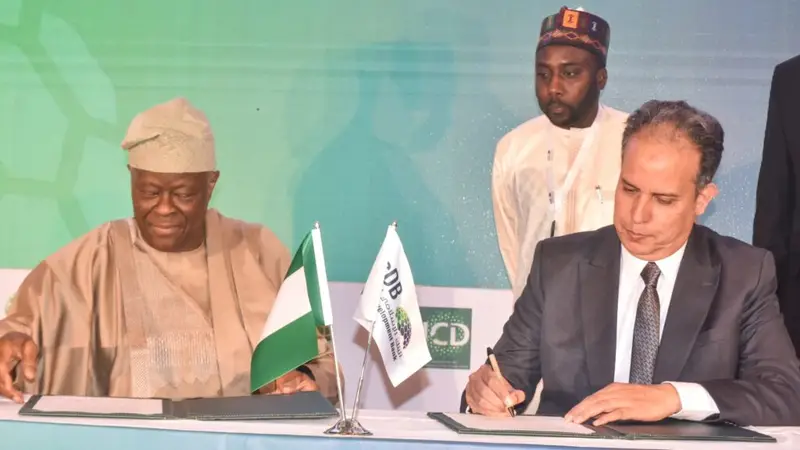
The Minister of Finance and Coordinating Minister of the Economy, Mr. Wale Edun, has disclosed that Nigeria is targeting a seven per cent annual Gross Domestic Product (GDP) growth rate as part of efforts to reduce poverty and drive sustainable economic development.
Edun made this known on Monday in Lagos during the Islamic Development Bank (IsDB) Day, where he also revealed that the country requires approximately 14 billion dollars annually to bridge its infrastructure deficit.
According to the minister, achieving the seven per cent growth target is crucial to outpacing Nigeria’s population growth rate, estimated at about three per cent, and lifting millions out of poverty.
He noted that the Federal Government is repositioning the economy to attract large-scale domestic, diaspora, and foreign investments by ensuring a stable macroeconomic environment.
“We are moving from stabilisation to growth, from reliance on public financing to private capital mobilisation, and from traditional borrowing to innovative financing instruments,” Edun said.
He explained that Nigeria’s engagement framework with the IsDB for 2026–2028 is centred on infrastructure development, social investment, innovative financing, and regional cooperation.
Edun identified key priority sectors to include energy, transportation, agriculture, and digital infrastructure, noting that investment in digital systems is essential for empowering Nigeria’s youthful population and enhancing global competitiveness.
“In a young country like Nigeria, digital infrastructure is key to empowering our population for innovation, technology, and global competitiveness,” he said.
The minister also announced that 2026 has been designated as the year of social development, with plans to integrate up to 10 million Nigerians into productive economic activities through skills development, job creation, and financing support.
He added that the government would strengthen micro, small, and medium enterprises (MSMEs) to boost production and improve access to markets.
On funding strategies, Edun said Nigeria would deepen the use of Sukuk, expand domestic capital markets, and securitise public assets to attract private investment, while also prioritising policies that de-risk investments and enhance the ease of doing business.
He further stated that Nigeria is positioning itself as a leader in regional economic cooperation within the IsDB framework, with an ambitious goal of building a one trillion-dollar economy.
Edun emphasised the need for accelerated project implementation and efficient capital mobilisation to generate employment opportunities at scale.
In his remarks, the Director-General of Country Programmes at the IsDB, Mr. Anasse Aissami, reaffirmed the bank’s commitment to supporting Nigeria’s economic transformation.
Aissami noted that the bank has expanded its interventions across key sectors, including agriculture, energy, transport, health, and education, adding that support to Nigeria would increase significantly over the next five years, surpassing its engagement over the past 25 years.
Read also:SEREC advocates rail connectivity to seaports to boost trade, economic growth
The IsDB Group Day featured activities such as the signing of a Memorandum of Understanding (MoU), business partnership presentations, a news conference, and panel discussions.
The event attracted top government officials, private sector leaders, financial institutions, chambers of commerce, development partners, and international stakeholders.