
Economy
Food import surge hits N7.65trn as FG waiver policy pressures local farmers

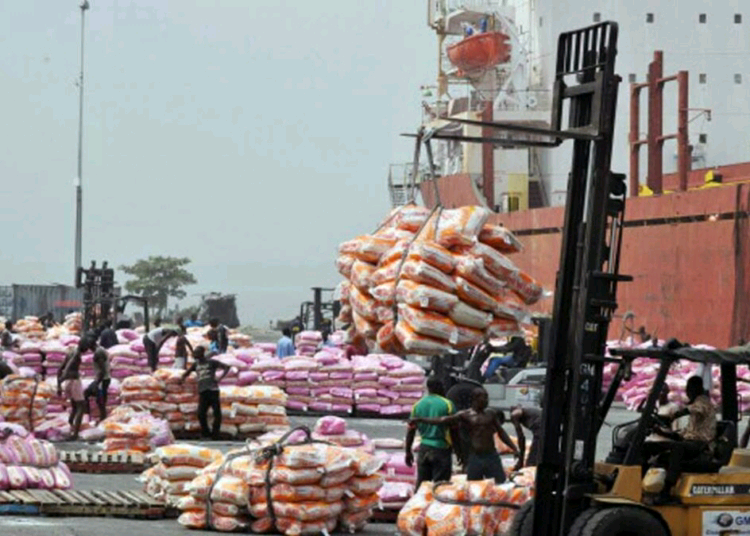
Nigeria’s food and beverage import bill rose sharply to N7.65 trillion in 2025, the highest level in four years, following the Federal Government’s import waiver policy introduced to curb soaring food inflation.
Data from the National Bureau of Statistics (NBS) shows the figure represents a 63 per cent increase from N2.86 trillion recorded in 2022, highlighting the growing reliance on foreign food supplies.
The policy, introduced in 2024 when food inflation climbed above 40 per cent, helped ease price pressures but significantly expanded import volumes. Imports had already surged to N6.58 trillion in 2024 before peaking in 2025.
Breakdown of the data indicates that N1.34 trillion was spent on food for household consumption, more than double the N529.4 billion recorded in 2022, while N2.09 trillion went into industrial food imports. Processed food alone accounted for over N4 trillion, more than twice the 2022 figure.
Industry stakeholders say the policy has had unintended consequences on local production. A rice miller in Anambra said the influx of cheaper imported rice forced producers to sell below cost.
“It was a disaster. The cost of production is high, so there was no way we could sell at the same price as imported rice,” the miller said, adding that several mills have shut down, leading to job losses.
President of the Nigeria Agribusiness Group, Ibrahim Kabiru, attributed the spike in imports directly to the waiver policy, warning that it was introduced without adequate consideration for its impact on domestic farmers.
“The reason we are seeing a rise in import is because of the import waiver policy. This allowed massive importation of food commodities without much thought of how it will affect farmers,” Kabiru said.
He called for full implementation of the Guaranteed Minimum Price scheme to protect farmers from losses and urged the government to declare a state of emergency on farm inputs such as fertilisers, whose prices have doubled in the past year.
Analysts warn that while the policy may have offered short-term relief for consumers, it has increased pressure on foreign exchange reserves and weakened local agricultural production, raising concerns about long-term food security.